
A Beginner's Guide to Special Education: Deconstructing the Special Education Journey for the Modern Family

Updated: Mar 19
Published 3/18/2026
We Have a Diagnosis, Now What?
A very common assumption a parent or guardian makes when entering a school building is that a medical diagnosis functions as a master key. In the clinical world, a diagnosis is a destination—a label that explains symptoms and triggers treatment.1 In the educational world, however, a diagnosis is merely an invitation to a conversation.2 It is entirely possible, and statistically common, for a child to possess a formal medical diagnosis from a world-renowned neurologist and yet be legally ineligible for special education services.3 This friction point creates profound "advocacy whiplash" for families who expect the school to mirror the medical model.
To successfully support a student, one must move from the question of "What does my child have?" to the much more complex inquiry: "How does my child function within the specific ecosystem of the classroom?".4

The Legal Foundations: Section 504 vs. IDEA
The first "High-Signal" takeaway for any guardian is the fundamental distinction between civil rights and educational benefits. These are the two pillars of U.S. federal special education law, and they serve radically different masters.5 Section 504 of the Rehabilitation Act of 1973 is a broad civil rights statute designed to eliminate discrimination.7 Its primary mechanism is the removal of barriers. If a student has a physical or mental impairment that "substantially limits one or more major life activities"—such as walking, breathing, or learning—the school must provide accommodations to ensure equal access.6
The Individuals with Disabilities Education Act (IDEA), conversely, is an educational benefit law.5 While Section 504 "levels the playing field" by providing access, IDEA "builds a customized vehicle" by providing a Free Appropriate Public Education (FAPE) via an Individualized Education Program (IEP).6 A Section 504 plan is focused on the environment (e.g., providing a quiet room for testing), whereas an IEP is focused on the instruction (e.g., specialized reading intervention).6 This distinction is the "So What" of legal advocacy: a 504 Plan ensures a student can get into the classroom and participate, but an IEP ensures they can actually learn and progress through specially designed instruction.9
Feature | Section 504 Plan | Individualized Education Program (IEP) |
Legal Mandate | Civil Rights / Anti-Discrimination 5 | Educational Benefit 5 |
Eligibility Scope | Broad: Any disability affecting a life activity 7 | Narrow: Must fit one of 13 specific federal categories |
Primary Requirement | Substantial limitation of a life activity 9 | Educational impact and need for special instruction 4 |
Documentation | 504 Plan (often less formal) 6 | IEP (highly detailed, legally binding) 6 |
Funding Source | Local/General funds (no federal additive) 10 | Federal and State supplementary funding 6 |
Primary Goal | Access to education 5 | Meaningful educational progress 9 |
Review Frequency | Periodic reevaluation 6 | Mandatory annual review and 3-year reevaluation |
"Section 504 is different from the Exceptional Children's Program in that the Individuals with Disabilities Act (IDEA) has a defined list of disabilities that may qualify under IDEA. Section 504 is much broader in that it has no list." 7
The "So What": Understanding this divide allows parents to strategically choose the right support. If a student is intellectually capable but struggles with physical access or temporary medical conditions (like cancer in remission), a 504 Plan provides the legal shield of non-discrimination without the administrative weight of an IEP.9 However, if the disability changes how the student learns, an IEP is the only tool that mandates specialized teaching methods.6
The Three-Prong Gatekeeper of Eligibility
The mechanism by which a U.S. school determines eligibility for an IEP is not a subjective judgment but a "Three-Prong Test" mandated by federal regulations. This is the most critical hurdle for any student referred for special education. For a student to qualify, the IEP team must find that all three prongs are satisfied.1
Prong One requires the presence of a qualifying disability.11 Under IDEA, there are 13 specific categories, including Autism, Specific Learning Disability (SLD), Emotional Disturbance, and Other Health Impairment (OHI).
Prong Two is the "Adverse Effect" requirement.1 The team must prove that the disability negatively impacts the student’s educational performance.13 This is the stage where many high-achieving students with disabilities are denied services because their grades remain average or high, despite their internal struggle.13
Prong Three is the "Need for Specially Designed Instruction".1 Even if a child has a disability and it impacts their performance, they only qualify for an IEP if they require specialized teaching that cannot be provided through general education interventions alone.
Prong | Requirement | Educational Evidence Needed |
Prong 1 | Qualifying Disability | Formal evaluation data across all suspected areas. |
Prong 2 | Adverse Effect | Grades, test scores, behavioral reports, and social-emotional data.13 |
Prong 3 | Specially Designed Instruction | Proof that general education/MTSS interventions were insufficient. |
"The foundation of special education eligibility rests on three prongs: the presence of a disability, an adverse impact on educational performance, and the requirement for special education and related services." 11
The "So What": Parents often focus exclusively on Prong One—proving the disability. However, the battle for services is usually won or lost on Prongs Two and Three. Advocates must curate data that shows not just that the disability exists, but that it is actively "breaking" the student’s ability to learn and that the general education "toolbox" is empty of solutions.1
The Diagnosis vs. Eligibility Paradox
Perhaps the most counter-intuitive insight in special education is that a medical diagnosis is neither sufficient nor always necessary for an IEP.2 In the clinical world, a physician diagnoses a condition like ADHD or ASD using the DSM-5 to provide treatment or medication.2 In the school world, the IEP team uses IDEA regulations to identify a "handicapping condition" that necessitates educational support.3
A student may have a medical diagnosis of Dyslexia, but the school may find them ineligible for an IEP if the student is meeting grade-level standards through their own compensatory strategies.3 Conversely, a student can be identified under the "Autism" category for an IEP based on school assessments of social-communication deficits, even if they have never seen a medical doctor for a formal diagnosis.1 Schools do not "diagnose" medical conditions; they "identify" educational disabilities.15
Aspect | Medical Diagnosis (Clinical Model) | Educational Identification (School Model) |
Evaluator | Doctor, Neurologist, or Clinical Psychologist 2 | Multi-disciplinary team (IEP Team) 15 |
Cost | Family/Insurance 2 | Free to the family (Public expense) 2 |
Primary Goal | Treatment and symptom management 2 | Ensuring access and educational progress 2 |
Standard | DSM-5 or ICD-10 15 | IDEA 2004 / State Regulations 15 |
Result | Prescription, therapy referral, or prognosis 2 | IEP or 504 Plan with specific school supports 9 |
"A medical diagnosis of an illness does not automatically mean a student can receive services under Section 504. The illness must cause a substantial limitation on the student's ability to learn or another major life activity." 9
The "So What": This paradox underscores the importance of school-based evaluations. A medical diagnosis can be used as "evidence" during the school’s evaluation process, but it is not a "golden ticket".2 Parents should view their private medical reports as one voice among many in the IEP meeting, not as a binding directive to the school.2
Measuring the "Invisible" Metric: Educational Need and the Endrew F. Standard
The measure of "educational need" is far more complex than a simple GPA. In the contemporary special education landscape, "educational performance" is a broad umbrella that covers both academic and functional domains.1 Academic performance focuses on traditional skills like reading and math.17 However, federal law explicitly states that schools must also consider functional performance: social-emotional status, communicative competence, motor abilities, and health.14
A landmark 2017 Supreme Court decision, Endrew F. v. Douglas County School District, raised the bar for what constitutes "educational need." The Court rejected the "de minimis" (trivial) standard of progress, ruling that a school must offer an IEP "reasonably calculated to enable a child to make progress appropriate in light of the child's circumstances". This means every child should have the chance to meet "challenging objectives".
Domain | Examples of Metrics Used | Why it Matters |
Academic | Standardized achievement tests, curriculum-based measures.19 | Measures the "gap" between grade-level expectations and current skills.23 |
Functional | Social skills scales, Adaptive Behavior (ABAS), Functional Behavior Assessment (FBA).24 | Captures "hidden" barriers like executive dysfunction or social anxiety.24 |
Developmental | Norm-referenced cognitive and motor assessments. | Identifies neurological "glitches" that impede the learning process.4 |
"To meet its substantive obligation under the IDEA, a school must offer an IEP reasonably calculated to enable a child to make progress appropriate in light of the child's circumstances."
The "So What": For parents of high-achieving children, the functional domain is the most powerful lever. A student might be passing AP classes but be unable to navigate the school day without a panic attack. That social-emotional struggle is an "educational need" that can justify an IEP under categories like Emotional Disturbance or OHI.
The MTSS Process: The "Pre-Referral" Ecosystem
Before a student is officially "labeled," most school districts utilize a Multi-Tiered Support System (MTSS) or Response to Intervention (RTI). This is a "Pattern Interrupt" for many parents who want an immediate evaluation. MTSS is a federal emphasis on attempting to remediate problems in general education before jumping to a special education referral.25
This tiered approach ensures that a child’s difficulties aren't simply the result of "lack of appropriate instruction" in reading or math.13
In Tier 1, all students receive high-quality core instruction.
In Tier 2, struggling students receive small-group support.
In Tier 3, they receive intensive, individualized intervention.
If a student shows "consistently no progress" after tracking in this process, the referral to special education is triggered.28
Tier | Intervention Level | Data Collected |
Tier 1 | Universal instruction for all.25 | Common assessments for all students.25 |
Tier 2 | Targeted, small-group support.25 | Progress monitoring of specific sub-skills.25 |
Tier 3 | Intensive, individualized support.25 | Detailed "Gap Analysis" and response-rate data.23 |
"MTSS is a comprehensive, systemic process designed to document student responses to instruction and provide necessary interventions... prior to a formal referral to special education." 25
The "So What": MTSS is not a delay tactic; it is a data-gathering mission. The "High-Signal" insight here is that the data collected during these interventions becomes the most compelling evidence in an IEP eligibility meeting. If the school has tried three different research-based reading programs and none worked, the "need" for Prong Three is effectively proven.13
The 60-Day Clock: National Timelines and Consent
Federal law (IDEA) establishes a strict "60-calendar-day" timetable for the initial evaluation process, beginning from the moment the parent provides written consent. While some states mandate shorter windows, the 60-day rule is the federal floor. Within this window, the district must conduct the tests and reconvene to decide on eligibility.
A critical nuance for parents is the power of consent. The school district must obtain written parent consent before conducting any initial evaluation. Furthermore, being "eligible" for an IEP is not the same as having one. The parent is a "critical equal member" of the team and can choose to stop the process at any time, even after a student has been found eligible.2
Step in Process | Requirement | Timeline |
Referral | Written request by parent or teacher. | Day 0.4 |
Consent | Parent signs the evaluation plan. | Within 10 days of request (common). |
Evaluation | Testing across all areas of suspected disability.4 | Completed within 60 days (Federal). |
Eligibility Meeting | Team reviews data and decides on the Three Prongs.4 | Within 30 days of report. |
"Evaluations can be completed before the 60-day timeline elapses, but this is not required... all students who are suspected of having disabilities that would make them eligible for special education must be evaluated."
The "So What": Knowledge of the timeline rule is a parent’s greatest protection against administrative inertia. If a school tells you "we'll wait and see how he does next semester," and you believe a disability is present, a formal written referral "starts the clock" and legally compels the district to act.
The Twice-Exceptional (2e) Mask: High Ability and Disability
One of the most profound "Intellectual Curations" in this report is the reality of the "Twice-Exceptional" or 2e student. These are students who possess "extraordinary learning ability" (giftedness) but also have a disability that interferes with learning.31 These students are often the most underserved because their high intellect "masks" their disability, and their disability "masks" their giftedness.11
A 2e student might appear to have "average" academic performance, but they are actually underperforming relative to their true potential. For these students, the "Adverse Effect" is the massive cognitive energy required to compensate for their disability—a cost that often leads to burnout, anxiety, and eventual academic collapse as the schoolwork becomes more rigorous.31
Scenario | Perception | Reality |
Gifted masks Disability | Student is "lazy" or "underachieving." | Disability is hidden until school becomes rigorous.32 |
Disability masks Giftedness | Student is only seen as "disabled." | Giftedness is never nurtured or recognized.32 |
Mutual Masking | Student appears "average" and "fine." | Student is languishing without either support or enrichment.32 |
"A 2e student may be identified as gifted but seen as underperforming in school... their giftedness may mask their disability to the point where it is only recognized when school becomes more rigorous." 32
The "So What": For parents of 2e children, the advocacy goal is to prove that "average" is actually a sign of "adverse impact." If a student with a high IQ is reading at the 50th percentile, that is a significant "gap" that may warrant an IEP, even if they aren't "failing" by traditional standards.31
Specific Learning Disabilities (SLD) and the Death of "Wait to Fail"
The identification of Specific Learning Disabilities (SLD), such as Dyslexia, has undergone a revolutionary shift. Historically, schools used the "Ability-Achievement Discrepancy" model, which required a student to have a significant gap between their IQ and their achievement scores.13 Critics called this the "Wait to Fail" model because a child’s achievement often wouldn't drop low enough to create a "discrepancy" until third or fourth grade.27
Modern federal guidelines prioritize "Response to Intervention" (RTI) and "Patterns of Strengths and Weaknesses" (PSW). This allows the team to look at the "Dual Discrepancy": (1) the student is performing significantly below peers, and (2) the student is failing to "close the gap" even with intensive help.23 This allows for much earlier identification and intervention.27
Model | Mechanism | Impact on Student |
Discrepancy Model | IQ score vs. Achievement score gap.13 | Child must "fall behind" significantly to qualify.27 |
RTI/MTSS Model | Rate of learning vs. Peer learning rate.13 | Early identification based on lack of progress.27 |
PSW Model | Analysis of internal strengths and weaknesses. | Comprehensive look at the "why" behind the struggle.4 |
"Dual discrepancy is NOT the same as a discrepancy between ability and achievement... [it is] a method for analyzing the ‘GAP’ between where the student is and where he/she should be." 23
The "So What": If your child is in kindergarten or first grade and struggling to decode words, don't let anyone tell you they are "too young" to be evaluated for a learning disability. The modern "Dual Discrepancy" model is built specifically to catch these issues before they become ingrained failures.33
FAPE, LRE, and the Myth of Segregation
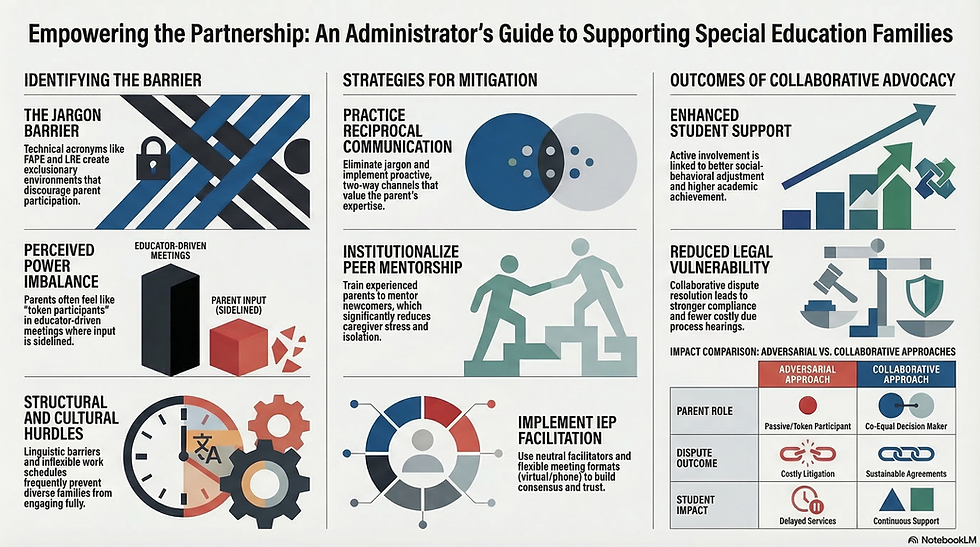
Two of the most misunderstood acronyms in special education are FAPE (Free Appropriate Public Education) and LRE (Least Restrictive Environment). A common myth is that special education is a "place" where kids go to be separated from their peers.34
In reality, IDEA mandates that students with disabilities be educated with non-disabled peers "to the maximum extent appropriate".
LRE is a legal right, not a physical location. It means that the "first placement option" considered for every student must be the general education classroom with "supplementary aids and services".36 A student only moves to a more "restrictive" setting if the nature or severity of their disability is such that they cannot make progress in the regular classroom even with help.36
Concept | The Myth | The Legal Reality |
FAPE | The school must provide the "best" education. | The school must provide an "appropriate" education that allows progress. |
LRE | Special ed students must be in separate classes.34 | Students must be in general ed as much as possible. |
Special Ed | It’s a place you "go to". | It’s a service that follows the child. |
"IDEA... says that kids who get special education should be in the same classrooms as other kids as much as possible. This concept is called least restrictive environment, or LRE." 34
The "So What": If the school proposes moving your child to a separate room for the entire day, they must legally prove why they cannot succeed in the regular classroom with additional support.36 As a parent, you have the right to ask for "supplementary aids and services"—like assistive technology—that would allow them to stay with their peers.
Behavior as Communication: Debunking the "Intent" Myth
When a child exhibits challenging behavior in school, the common reaction is to assume "spite" or "defiance".37 However, special education shifts the focus to "Function".33 In the world of special education, every behavior is a form of communication.37
A "meltdown" is often a student’s only tool for escaping a task that is cognitively overwhelming or for seeking sensory regulation.24 Schools use a "Functional Behavior Assessment" (FBA) to determine why a behavior is happening.33 Once the function is understood (Escape, Attention, Tangible, or Sensory), the school creates a "Behavior Intervention Plan" (BIP) that teaches the student a more "appropriate" way to get that need met.33
Behavior | Potential "Function" | The "So What" for Parents |
Refusal to work | Escape/Avoidance of a difficult task.24 | The child needs the task modified, not just more "discipline." |
Disrupting class | Seeking social attention or connection.24 | The child needs scheduled positive attention and social skills support. |
Crying/Meltdowns | Sensory overload or inability to self-regulate.37 | The child needs self-regulation tools, not a "time out".24 |
"One of the myths about these types of situations is that the behavior happened out of nowhere or there was not a clear reason... In reality, that meltdown or behavior issue is functioning for the child in some way." 37
The "So What": If your child is being suspended or disciplined for behaviors related to their disability, they are being punished for their "handicap". You have the right to request an FBA to uncover the "why" and a BIP to teach the "how" of better behavior.33
The Power of "Present Levels" (PLAAFP)
The most important part of the IEP document is the "Present Levels of Academic Achievement and Functional Performance" (PLAAFP).17 Think of the PLAAFP as the "You Are Here" dot on a mall map.18 If the PLAAFP is inaccurate or vague, the entire IEP will fail because it’s based on a false starting point.17
An effective PLAAFP must use "Baseline Data"—specific, measurable numbers.28 Instead of saying "Student struggles with reading," it should say "Student can decode 45 words per minute on a second-grade level passage with 80% accuracy".34 It must also describe the "Impact"—how the disability affects the child's involvement in the general curriculum.17
PLAAFP Component | What it Must Include | The Impact Statement |
Academic | Specific scores from universal screeners or classwork. | How this prevents them from mastering grade-level standards.18 |
Functional | Data on social skills, self-care, or attention.17 | How this prevents them from participating in school life.17 |
Strengths | What the child can do and what they enjoy.17 | How the teacher can use these strengths to support weaknesses.18 |
"The present level of academic achievement and functional performance narrative... is a primary component of an individualized education program (IEP) and is the basis for the development of all other components." 20
The "So What": Parents should scrutinize the PLAAFP section more than any other. If the school says your child has "made progress" but the baseline data in the PLAAFP hasn't changed in a year, you have the data needed to demand a change in intervention.20
Assessment Tools: Quantifying the Learning Gap
To build an IEP that actually works, schools must use "High-Signal" assessment tools. This involves a "Balanced Assessment System".40 This is not just about big year-end state tests (Summative), but about daily and weekly "check-ups" (Formative and Interim).40
Tools like NWEA MAP, STAR, and iReady are "universal screeners" used to identify students at risk.40 For students in the MTSS process, "Progress Monitoring" tests are given frequently (sometimes weekly) to see if an intervention is working.29 If the "Trend Line" of these scores is flat, the school knows they need to increase the intensity of the support immediately.29
Tool Category | Purpose | Examples |
Universal Screener | Identifies students "at risk" of falling behind peers.40 | NWEA MAP, STAR, iReady.41 |
Progress Monitoring | Measures growth in specific foundational skills.29 | AIMSweb, NWEA Fluency.29 |
Diagnostic | Pinpoints exactly why a student is struggling with a skill.40 | Skill-specific assessments.40 |
"At a minimum, educators need 6-10 data points to determine whether progress is being made... You need to look at whether the student is progressing at a rate that equals the goal." 22
The "So What": As a parent, you have the right to ask for "Progress Monitoring" reports. If your child is in a Tier 2 reading group, don't just ask "how are they doing?" Ask to see the "Progress Monitoring Graph." This graph is a visual representation of your child's learning rate and is the most honest indicator of whether the help is sufficient.29
The Final Word
The special education journey is less a sprint toward a diagnosis and more a marathon of intellectual curation. When parents understand that "educational need" is a measurable, dynamic gap between a student’s current performance and their inherent potential—now underscored by the Supreme Court’s Endrew F. mandate for appropriately ambitious progress—they stop being observers and start being strategic partners in their child’s success.
The Sticky Question: If we stripped away your child's medical label, what specific, measurable data points would remain to prove they are entitled to a different kind of education?
References
Forte Law Group. (2025). Connecticut Parents' Guide to Navigating the IEP Process. 4
Iris Center at Vanderbilt University. (2017). Understanding the Endrew F. Ruling.
Jenny Ponzuric. (2026). The Three Prongs of Special Education Eligibility. 11
Justia Summary. (2017). Endrew F. v. Douglas County School District.
Learning for a Purpose. (2025). Special Education Quotes and Philosophy.
PACER Center. (2018). Understanding the PLAAFP Statement. 18
U.S. Department of Education. (2024-2025). IDEA Policy Guidance and Inclusive Practices.
Understood.org. (2026). IEP vs. 504 Plan: What is the Difference?.
Wrightslaw. (2017). Endrew F. v. Douglas County: The Supreme Court Benefit Standard.
Works cited
medical condition & or clinical diagnosis special education eligibility & identification - Exceptional Children's Assistance Center (ECAC), accessed March 17, 2026, https://www.ecac-parentcenter.org/wp-content/uploads/Medical-vs-Educational-2025.pdf
Disability DIAGNOSIS VERSUS EDUCATIONAL ELIGIBILITY - KY-SPIN, accessed March 17, 2026, http://www.kyspin.com/wp-content/uploads/2024/01/KY-SPINs-Diagnosis-vs-Educational-Eligibility-printer-friendly.pdf
FAQ: Medical Diagnosis and IDEA Eligibility - Disability Rights Arizona, accessed March 17, 2026, https://disabilityrightsaz.org/resource/faq-medical-diagnosis-and-idea-eligibility/
Connecticut Parents' Guide to Navigating the IEP Process Step-by ..., accessed March 17, 2026, https://www.fortelawgroup.com/connecticut-parents-guide-to-navigating-the-iep-process-step-by-step/
What is the difference between Section 504 and IDEA?, accessed March 17, 2026, https://www.northcollins.com/departments/special_education/difference_between_section_504_and_i_d_e_a_
The Difference Between IEPs and 504 Plans, accessed March 17, 2026, https://scdd.ca.gov/wp-content/uploads/sites/33/2018/03/The-Difference-Between-IEP-and-504-Plans.pdf
Students with Disabilities | NC DPI, accessed March 17, 2026, https://www.dpi.nc.gov/students-families/parents-corner/students-disabilities
The difference between IEPs and 504 plans - Understood, accessed March 17, 2026, https://www.understood.org/en/articles/the-difference-between-ieps-and-504-plans
Section 504 Accommodations - DoWEA, accessed March 17, 2026, https://www.dodea.edu/education/student-services/section-504-accommodations
IDEA vs 504 - Punxsutawney Area School District, accessed March 17, 2026, https://www.punxsy.k12.pa.us/apps/pages/index.jsp?uREC_ID=1130360&type=d&pREC_ID=1400364
The Three Prongs of Special Education Eligibility: A Guide to Navigating the Assessment Process - Jenny Ponzuric, accessed March 17, 2026, https://jennyponzuric.com/the-three-prongs-of-special-education-eligibility-a-guide-to-navigating-the-assessment-process/
Disability Categories | Arizona Department of Education, accessed March 17, 2026, https://www.azed.gov/specialeducation/disability-categories
Eligibility Criteria - Charter SELPA, accessed March 17, 2026, https://charterselpa.org/Procedural-Guide/Eligibility-Criteria/
(3.30) Several special education eligibility categories require that a student's condition or disability “adversely affect educational performance.” What does that phrase mean?, accessed March 17, 2026, https://serr.disabilityrightsca.org/serr-manual/chapter-3-information-on-eligibility-criteria/3-30-several-special-education-eligibility-categories-require-that-a-students-condition-or-disability-adversely-affect-educational-performance-what-does-that-phrase/
Spread the Word: Autism Diagnosis: Educational vs Medical - IN.gov, accessed March 17, 2026, https://www.in.gov/doe/files/Spread-the-Word_-Autism-Diagnosis_-Educational-vs-Medical-1.pdf
Disability Condition Eligibility Definitions | Texas SPED Support, accessed March 17, 2026, https://spedsupport.tea.texas.gov/resource-library/administrator-toolkit-sped-and-intervention-101/disability-condition-eligibility
Individualized Education Program (IEP) - Present Levels of Performance - Connecticut Parent Advocacy Center, accessed March 17, 2026, https://cpacinc.org/iep-present-levels-of-performance.aspx
A place to start: Understanding the present levels of academic achievement and functional performance (PLAAFP) statement - PACER Media, accessed March 17, 2026, https://media.pacer.org/php/php-c186.pdf
Evaluating School-Aged Children for Disability - Center for Parent Information and Resources, accessed March 17, 2026, https://www.parentcenterhub.org/evaluation/
Present Level of Academic Achievement and Functional Performance (PLAAFP) - Wayne RESA, accessed March 17, 2026, https://www.resa.net/downloads/special-education/present-level-academic-achievement-functional-performance.pdf
Determining Whether a Child is Eligible for Special Education Services, accessed March 17, 2026, https://ldaamerica.org/info/eligibility-determining-whether-a-child-is-eligible-for-special-education-services/
Strategies for Effective Progress Monitoring for MTSS - edWeb, accessed March 17, 2026, https://home.edweb.net/effective-progress-monitoring-for-mtss/
Guidelines for Identifying Children with Learning Disabilities - CT.gov, accessed March 17, 2026, https://portal.ct.gov/-/media/sde/special-education/rev_sp_role_in_implementing_ld_gl_111413.pdf
Guidelines for Identifying and Educating Students with Emotional Disability - CT.gov, accessed March 17, 2026, https://portal.ct.gov/sde/publications/identifying-and-educating-students-with-emotional-disability/assessment-and-eligibility
Multi-Tiered Support Systems – Ashford School, accessed March 17, 2026, https://school.ashfordct.org/district-information/pupil-personal-services/scientic-based-intervention/
Mission Statement – Ashford School, accessed March 17, 2026, https://school.ashfordct.org/district-information/pupil-personal-services/mission-statement/
The Three Methods of Learning Disability Identification, accessed March 17, 2026, https://ldaamerica.org/the-three-methods-of-learning-disability-identification/
Pupil Personnel Services - Ashford School District, accessed March 17, 2026, https://school.ashfordct.org/district-information/pupil-personal-services/
Progress Monitoring - NWEA Map, accessed March 17, 2026, https://teach.mapnwea.org/impl/maphelp/Content/ReadFluency/ProgressMonitoring.htm
How to build a balanced assessment system - Teach. Learn. Grow. - NWEA, accessed March 17, 2026, https://www.nwea.org/blog/2025/how-to-build-a-balanced-assessment-system/
STATE OF CONNECTICUT REGULATIONS STATE BOARD OF EDUCATION Section 1. Section 10-76a-1 of the Regulations of Connecticut State Ag, accessed March 17, 2026, https://cpacinc.org/docs/final-Sp-Ed-Draft-regulations-1-4-20101.pdf
Twice Exceptional (2E) - Connecticut Association for the Gifted, accessed March 17, 2026, https://www.ctgifted.org/families/twice-exceptional-2e
2009 GUIDELINES for IDENTIFYING CHILDREN with LEARNING DISABILITIES - CT.gov, accessed March 17, 2026, https://portal.ct.gov/-/media/SDE/Special-Education/2009_LDguide_ExSum.pdf
10 special education myths you may hear - Understood, accessed March 17, 2026, https://www.understood.org/en/articles/10-myths-parents-may-hear-about-special-education
Dispelling 11 Common Myths About Kids with Disabilities, accessed March 17, 2026, https://www.kit.org/common-myths-about-kids-with-disabilities/
Special Education Eligibility - Connecticut Parent Advocacy Center, accessed March 17, 2026, https://cpacinc.org/special-education-eligibility.aspx
5 Common Behavior Myths Every Parent Should Know, accessed March 17, 2026, https://www.parentingspecialneeds.org/article/5-common-behavior-myths-every-parent-should-know/
Top Twelve Myths in Special Education - McAndrews Law Firm, accessed March 17, 2026, https://mcandrewslaw.com/publications-and-presentations/articles/top-twelve-myths-in-special-education/
Section 4: Annual Goals and Short-term Objectives - CT.gov, accessed March 17, 2026, https://portal.ct.gov/sde/special-education/connecticut-iep-manual/section-4-annual-goals-and-short-term-objectives
Connecticut Student Assessment Main Page - CT.gov, accessed March 17, 2026, https://portal.ct.gov/sde/student-assessment/main-assessment/student-assessment
How do I use assessment partner (NWEA, Star, or iReady) data to determine progress monitoring level? - Classworks, accessed March 17, 2026, https://help.classworks.com/article/1632-how-do-i-use-assessment-partner-nwea-star-or-iready-data-to-determine-progress-monitoring-level
A Parent's Guide to Special Education 2021 - CT.gov, accessed March 17, 2026, https://portal.ct.gov/-/media/sde/special-education/parents_guide_se.pdf

Comments